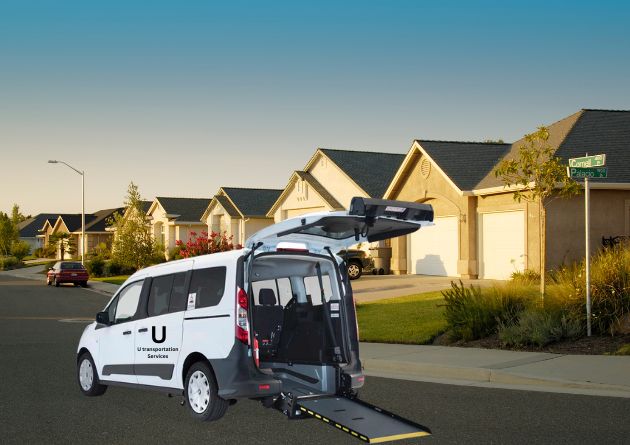
Not every van with a ramp is truly equipped for safe wheelchair transport. A plain-language guide to accessible NEMT in NH for patients and caregivers.
Finding a wheelchair-accessible vehicle in New Hampshire is harder than most people expect. Standard rideshare apps do not reliably offer accessible options. Taxis rarely carry ramps or securement systems. Family vehicles often lack the equipment needed to safely transport a power wheelchair. For the millions of Americans who use wheelchairs, getting to a medical appointment, a therapy session, or a specialist visit requires a different kind of transportation entirely.
This guide explains what wheelchair-accessible medical transport looks like in New Hampshire, who it is for, what to expect during a trip, and how to arrange it without the confusion that too often comes with this process.
What Makes a Vehicle Truly Wheelchair Accessible
The term wheelchair accessible is used loosely, and that creates real problems for patients and families trying to plan a safe trip. Not every van with a ramp is equipped to handle every type of wheelchair safely. Understanding the difference matters before you book.
A properly equipped NEMT wheelchair van includes a hydraulic or fold-out ramp rated for the weight of the passenger and their device, an interior with enough floor space to accommodate large power wheelchairs and scooters, floor-mounted tie-down systems that secure all four corners of the wheelchair frame, a shoulder harness and lap belt for the passenger, and sufficient headroom for passengers of varying heights.
Manual wheelchairs and lightweight transport chairs have different securement requirements than heavy power wheelchairs. A vehicle that can safely carry a folding manual chair may not be rated or equipped for a 300-pound power wheelchair. When you book, specify the exact type of wheelchair your family member uses. A good transportation provider will confirm the match before the trip.
Who Needs Wheelchair Van Transportation
The patients we most commonly transport by wheelchair van fall into several broad categories.
Seniors who have lost the ability to transfer independently are among the most frequent users of wheelchair van transport. Whether due to a stroke, Parkinson's disease, severe arthritis, or the aftermath of a hip or knee replacement, many older adults reach a point where transferring from a wheelchair to a standard car seat is either painful, unsafe, or impossible without mechanical assistance. A wheelchair van allows them to remain seated in their own chair for the entire trip.
Patients recovering from surgery or injury often need wheelchair transport for weeks or months during recovery. A person who had a hip replacement, a spinal procedure, or a serious leg fracture may be medically cleared to attend outpatient appointments but physically unable to get in and out of a standard vehicle. Wheelchair transport fills this gap during the recovery window.
Patients with neuromuscular conditions including multiple sclerosis, ALS, muscular dystrophy, and cerebral palsy frequently rely on power wheelchairs full time and need accessible transport for every trip outside the home. For these patients, transportation is not an occasional need. It is a recurring, essential service that requires a consistent and trustworthy provider.
Children with disabilities who attend medical appointments, therapy sessions, or specialized programs also need wheelchair van transport. Parents driving alone cannot always safely assist a child in a wheelchair into a standard vehicle, particularly for longer trips or when the child is large enough that lifting is not practical.
Wheelchair Transport versus Stretcher Transport
A common point of confusion is when to book wheelchair transport versus when to book a stretcher vehicle. The general rule is straightforward.
Wheelchair transport is for patients who can be safely positioned in a seated or semi-reclined position in their own wheelchair for the duration of the trip. Most patients who use wheelchairs full time fall into this category.
Stretcher transport is for patients who cannot be safely seated at all, including those who are bedridden, who have severe positioning needs due to wounds or post-surgical conditions, who are on portable monitoring equipment, or whose physicians have specifically ordered transport in a reclined position.
If you are unsure which applies, describe the patient's condition and positioning needs when you call. A knowledgeable coordinator can help determine the right vehicle type.
What Happens During a Wheelchair Transport Trip
For families booking wheelchair transport for the first time, knowing what to expect reduces anxiety for both the patient and the caregiver.
The driver arrives at the door of the residence or facility. They do not wait at the curb. If the patient needs to be escorted from inside the building, the driver comes inside to assist. This is door-to-door service in the true sense of the phrase.
The driver positions the ramp and assists the patient onto the vehicle, ensuring the wheelchair rolls up or down the ramp safely. Once inside, the wheelchair is locked into the floor-mounted securement system at all four corners. The passenger receives a shoulder harness and lap belt before the vehicle moves. This process takes a few minutes, and it should never be rushed. A properly secured wheelchair does not move during the trip even during hard braking.
At the destination, the process is reversed. The driver assists the patient off the vehicle and escorts them to the entrance. If the patient needs to be checked in, the driver can walk with them to the front desk before departing.
Return trips can be scheduled at a fixed time or arranged as a will-call pickup when the appointment ends at an uncertain hour. For patients with long appointment windows, the latter is often the better choice.
Medicaid Coverage for Wheelchair Transportation in New Hampshire
New Hampshire Medicaid covers non-emergency medical transportation, including wheelchair van transport, for eligible enrollees traveling to covered medical appointments. Coverage is administered through the state's transportation broker. To use this benefit, the trip must be to a Medicaid-covered service, the provider must be enrolled in Medicaid, and the trip must typically be requested at least 72 hours in advance.
Not every Medicaid enrollee qualifies for transportation coverage, and eligibility rules can be complex. Families should verify coverage with their case manager or by contacting NH DHHS before assuming the benefit applies.
For patients who do not qualify for Medicaid transportation or who prefer not to navigate the broker system, private pay wheelchair transport is available with no insurance requirement and no advance notice restrictions beyond standard scheduling.
Scheduling Wheelchair Transport in New Hampshire
Scheduling is simpler than many families expect. When you contact U Transportation Services, you will provide the pickup address and destination, the appointment time, the type of wheelchair the patient uses, and any assistance needs beyond standard boarding help. The coordinator confirms vehicle availability and assigns the right vehicle and driver.
For patients with recurring appointments such as dialysis three times per week, physical therapy twice a week, or regular oncology visits, standing schedules can be set up so you are not calling for each individual trip. Once the schedule is established, the same driver and vehicle are assigned whenever possible, which matters for patients with anxiety, cognitive impairments, or strong preferences for consistency.
Same-week bookings are accommodated when vehicle availability allows. For non-urgent appointments, booking a few days in advance is always preferable.
Where We Provide Wheelchair Transport in New Hampshire
U Transportation Services provides wheelchair-accessible medical transportation throughout New Hampshire, including Manchester, Nashua, Concord, Portsmouth, Dover, Laconia, Keene, Lebanon, Claremont, Rochester, and all surrounding communities. We handle local trips within a city and longer intercity transport to regional medical centers and specialty clinics.
Distance is not a barrier. If a patient in southern New Hampshire needs to travel to a specialty center in Concord or Lebanon, we handle that trip with the same door-to-door care as a local appointment.
Book Wheelchair Van Transport in New Hampshire
If you or a family member needs wheelchair-accessible transportation to a medical appointment anywhere in New Hampshire, U Transportation Services is available 24 hours a day, 7 days a week. You can book online through our booking form or call us directly at (603) 264-1307.
When you call, let us know the type of wheelchair being used and any specific boarding or positioning needs. We will confirm the right vehicle, assign a trained driver, and make sure the trip is handled with the care and professionalism that every patient deserves.
Written by
U Transportation Services
New Hampshire's trusted NEMT provider